|
|
 |
|
|
| |
Vintage
Baseball Glove Dating Guide |
|
|
|
1920 -
1929 Baseball Gloves |
|
|
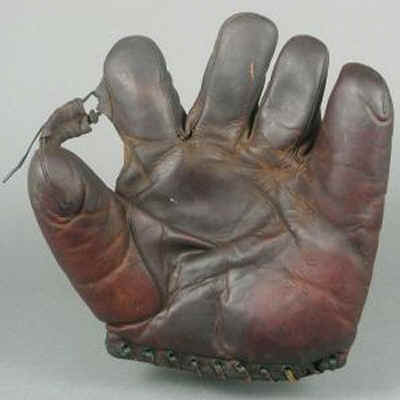
One inch webs still remain at the start of this era.
Manufacturers are developing the "Lacing Device" and using
lace between the thumb & forefinger which leads to the
vertical tunnel loop, and leather strips laced between
the thumb and forefinger. Substantial webbing is being
developed towards the end of the 1920's which will lead to the
modern day web. The "Bill Doak Era" of baseball Gloves begins.
|
|
|
|
|
 |
 |
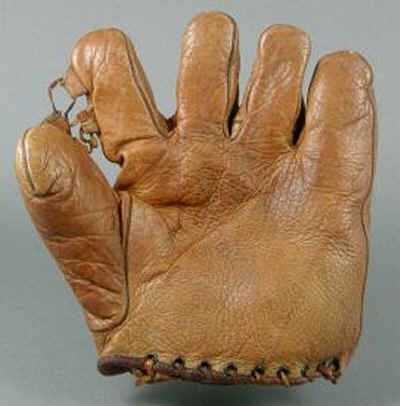
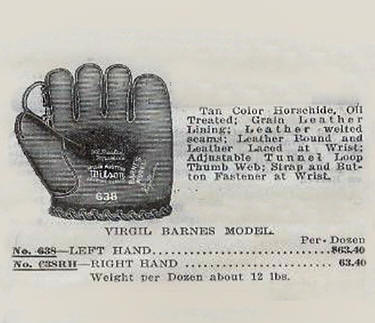
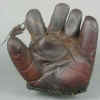
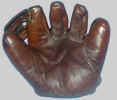
| 1926
Wilson Baseball Mitt, Model No. 638, Virgil Barnes Endorsement.
Single tunnel web connects the forefinger and thumb with
lace passed through sewn in loops. |
|
|
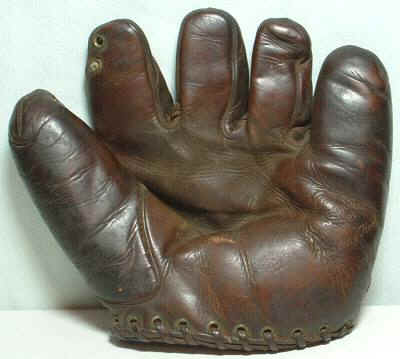
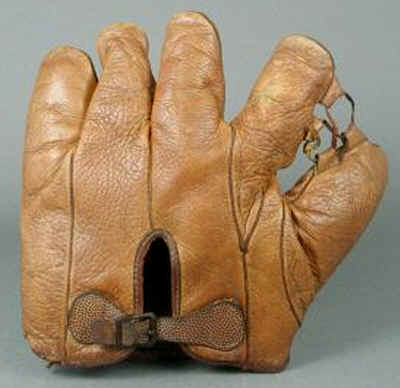
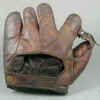
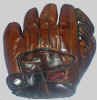
Vertical tunnel loop web circa
1920s elongated loops were sewn in directly to the thumb
and forefinger through which passed a simple rawhide
lace. |
|
|
|
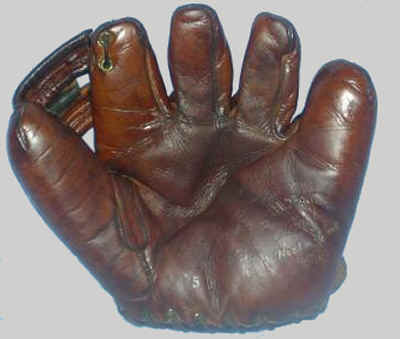
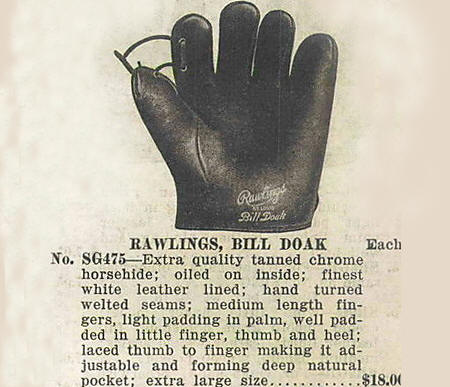
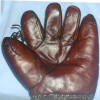
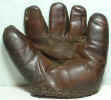
Rawlings Bill Doak baseball
glove..Model #5BD
|
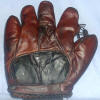
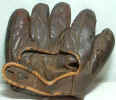
Earlier
Bill doak Model circa 1922 web missing
|
|
|
|
|
|
| The largest improvement
ever in glove design happened in 1920, when Bill Doak, a
journeyman pitcher for the St. Louis Cardinals,
approached Rawlings with an idea for a web laced between
the first finger and thumb. Before Doak's invention,
gloves were primarily protective equipment that kept
fielders' hands and fingers from being hurt by hard hit
balls. Doak developed the idea of putting a substantial
webbing between the glove's thumb and first finger to
form a substantial pre-formed pocket in which to catch
the ball. The Rawlings "Bill Doak" model that
was first introduced in 1920 was so revolutionary that
it remained available until 1953 with only minor
modifications. Doak's invention was the ancestor of all
modern gloves. |
|
|
|
|
|
|
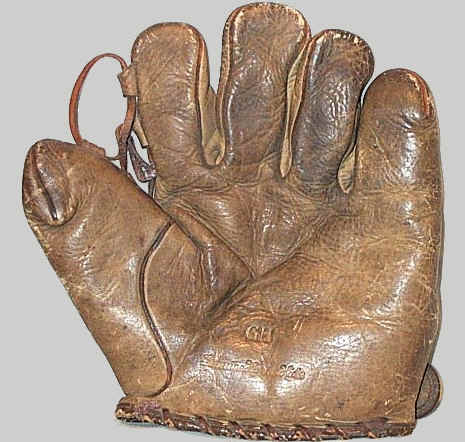
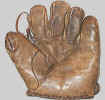
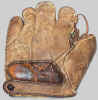
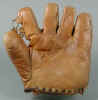
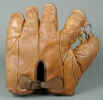
| 1920s
Loops sewn into forefinger, and thumb are connected by
lace. the 1920s brought many experiment with web
design. |
|
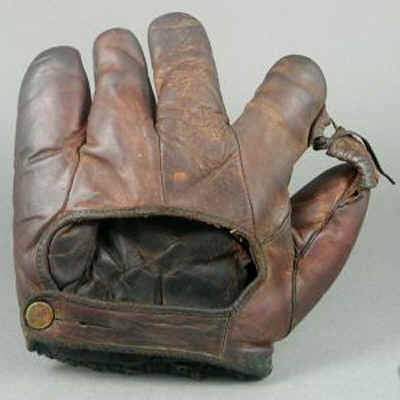
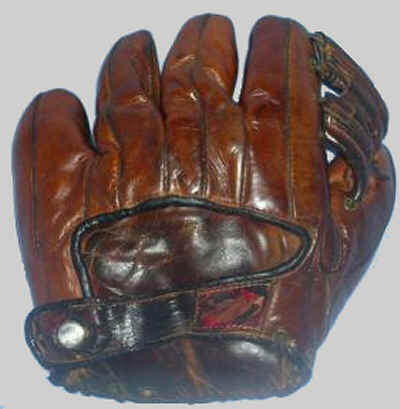
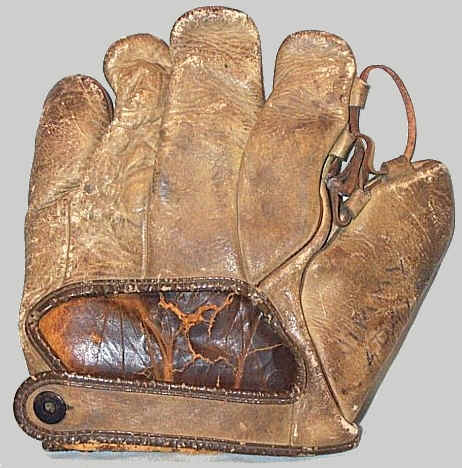
| Late 1920s Hutch
- William Wright Regan endorsed buckle back glove model # 736-V Dual Vertical Tunnel |
|
|
|
1920 - 1929
Baseball Glove &
Mitt Catalog Samples |
|
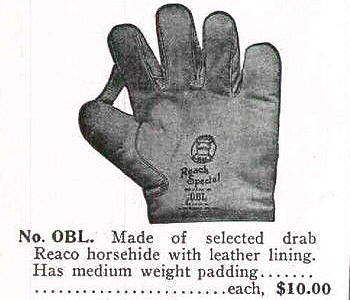
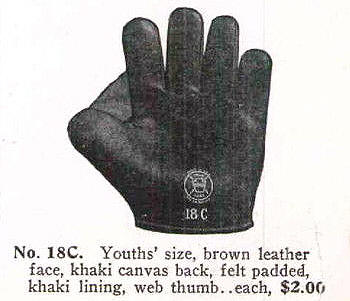
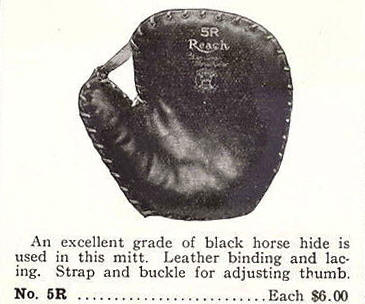
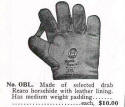
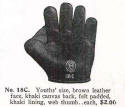
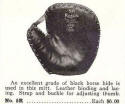
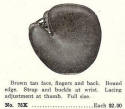
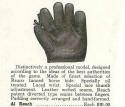
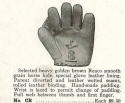
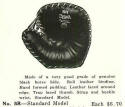
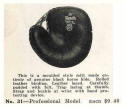
Sample photos below are taken from
wholesale catalogs issued between 1920 and 1929. |
 |
 |
 |
 |
1921
Reach OBL
Fielder's Glove |
1921
Reach 18C
Fielder's Glove |
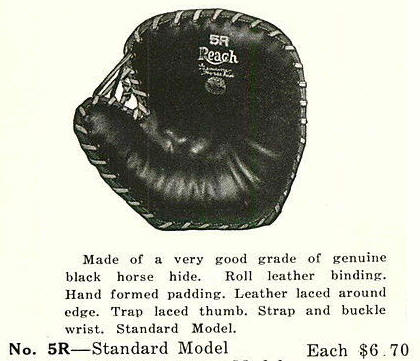
1922 Reach 5R
Baseman's Mitt |
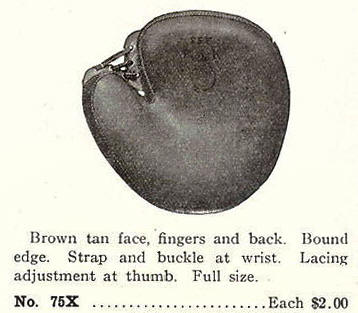
1922 Reach 75X
Catcher's Mitt |
 |
 |
 |
 |
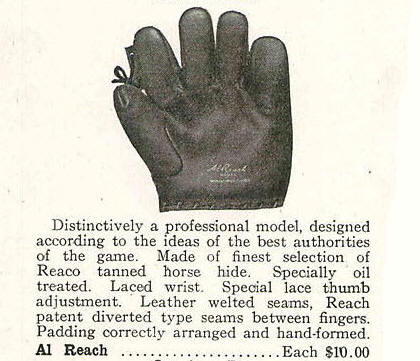
1922 Al Reach
Fielder's Glove |
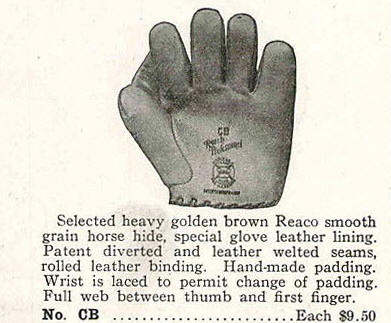
1922 Reach CB
Fielder's Glove |
1926 Reach 5R
First Base Mitt |
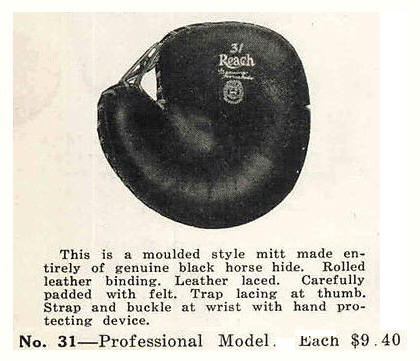
1926 Reach 31
Catcher's Mitt |
 |
 |
 |
 |
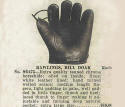
1927 Rawlings
Doak Fielders Glove |
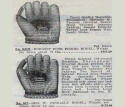
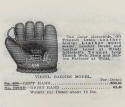
1930 Wilson 648M
Fielders Gloves |
1930 Wilson 638
Fielders Gloves |
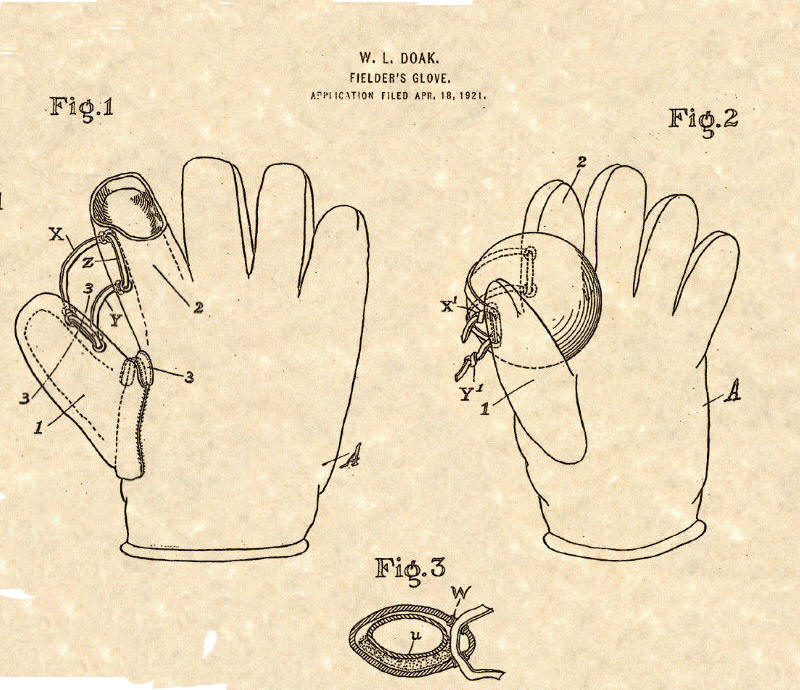
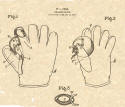
Bill Doak Patent
April 18,
1921 |
|
|
1920 - 1929
Baseball Glove Labels & Buttons |
|
|
 |
|
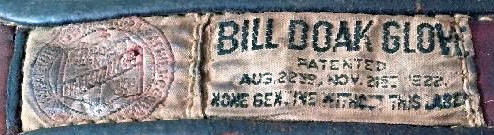
Patented 1922 Rawlings Bill Doak Label |
 |
 |
 |
 |
 |
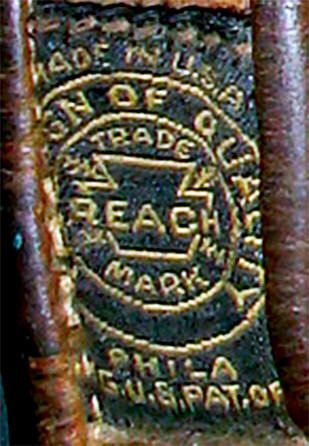
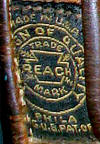
1920s Reach
Label |
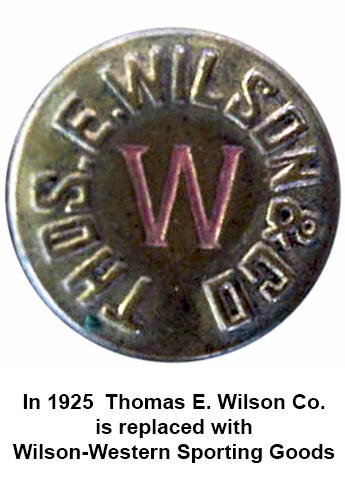
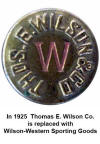
1920-24 Wilson
Button |
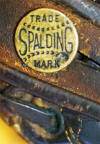
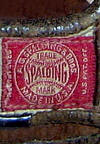
1920s Spalding Glove Button |
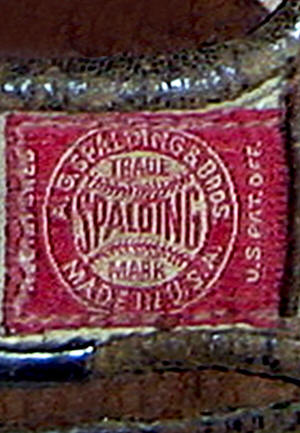
1920s Spalding Glove
Label |
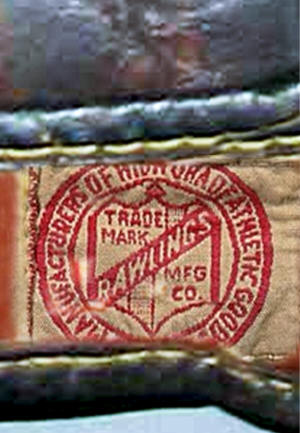
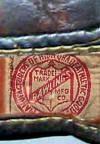
1920s Rawlings Glove Label |
|
|
|
|
|
|