|
|
 |
|
|
|
Baseball Memorabilia & Collectibles
Glossary |
| |
The most
comprehensive Glossary of baseball memorabilia and
collectible terms on the internet. Complete with
pictures, and cross reference links. Links that are
available will lead to another section of this page or
open in a new window. Use the
Visual Glossary if you know what it looks like but
don't know what it's called. |
|
|
|
|
|
| |
|
|
Select the first letter of the word, term, or phrase that you
are looking for the meaning of.
-Or- scroll down to browse. |
|
BASEBALL MEMORABILIA & COLLECTIBLES GLOSSARY |
|
|
|
|
|
|
|
| |
AL - Short for baseball's American League.
ALCS - Short for American League Championship Series. A stage in baseball's playoff system to get to the World Series.
Auction - An offering of baseball collectibles where the buyer must bid against other potential buyers, as opposed to ordering an item from a store, catalog, price list, or advertisement at a set price.
Auction House - A firm that conducts auctions. A venue to hold auctions offering items to be bid on. A company that holds live auctions in house or and on the internet. Popular auction houses include eBay, Heritage Auction Galleries, Lelands sotheby's, and others.
Authentication - Verifying the originality or genuineness of a sports collectibles item. For sports cards, the largest and most respected third party authentication (and grading) is Professional Sports Authenticator (PSA). For sports autographs, the most well known authentication service is PSA/DNA. For other sports memorabilia items you must depend on the selling dealer's knowledge and integrity.
Autograph - A person's signature. Autographs are a very significant part of the Baseball memorabilia market. Frequently autographed items include photos, cards, and equipment, baseballs, bats, uniforms, gloves, etc.
Autopen - A mechanical device that is used to duplicate a precise signature. The Autopen machines provide high quality signature replication with any common pen, pencil, or marker. Autopens are often used by celebrities who receive numerous requests for their autographs, and are also known to be used by scam artists to forge signatures on flat items. |
|
| |
|
|
|
|
|
|
B18
- Designation for the
1914 felt blankets.
also see Blanket
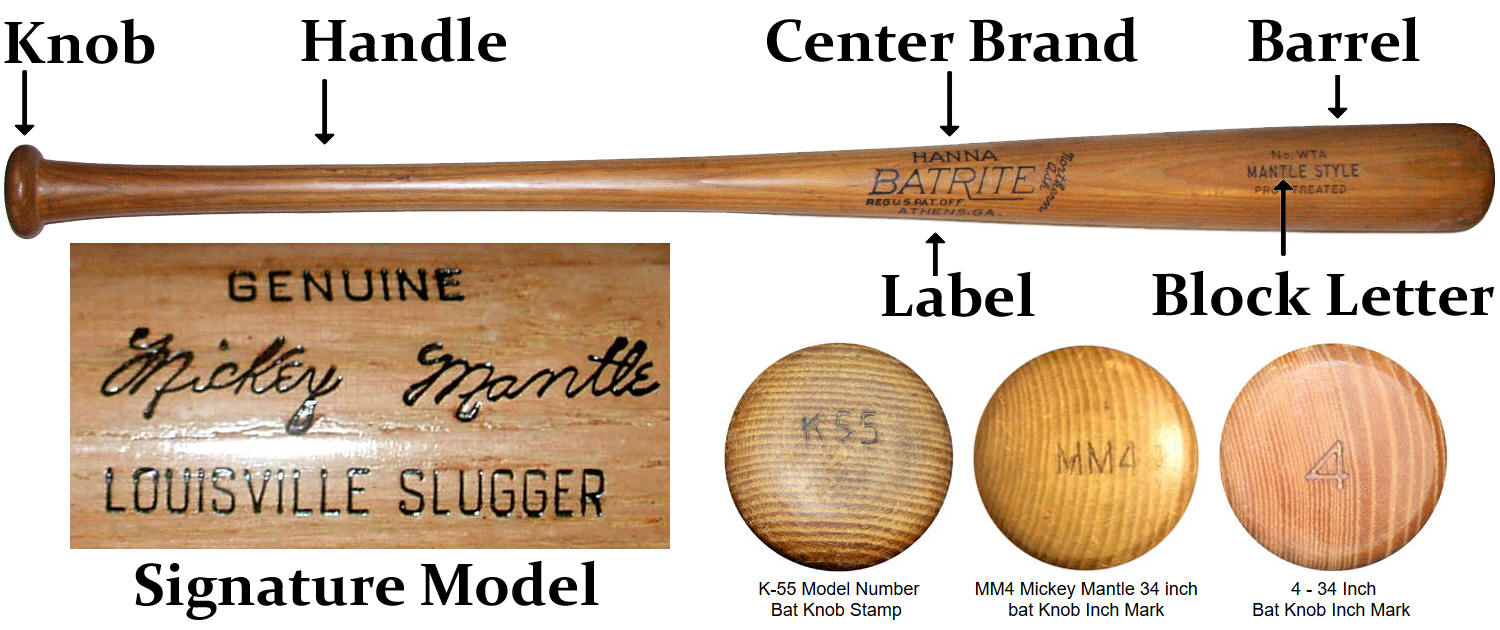
Barrel
- the business end of the baseball bat.
The thickest part of the bat that is
intended to meet the ball.
Barrel
Brand - The markings stamped or
burned onto the barrel of a baseball bat
by the manufacturer, usually identifying
the player's name, and registered
trademark(s) of the manufacturer. The
player's name may appear in block letters,
indicating that the manufacturer has no
right to produce bats for anyone other
than the player whose name appears on the
bat. The player's name may appear in a
scripted or facsimile signature version,
referred to as signature model, which
indicates that the manufacturer has the
right to produce bats for the public,
minor league teams, and college teams,
bearing the player's name. Such an
arrangement is referred to as an
endorsement contract.
Baseball Bat - (Bat) A
smooth wooden or metal club used in the
sport of baseball to hit the ball after it
is thrown by the pitcher. The bulk of the
collectors value for a baseball bat relies
on the players endorsement, and will vary
based on player demand. Value will
otherwise rely on vintage baseball bat
features such as with a ring bat, knob
style, decal, or ornate engraving. Rare
and notable bat brands, or bats produce
for a company that does not manufacture
baseball bats and uses that companies
brand name could carry a premium. See
Glossary of Baseball Bat Collecting terms
for more.
Bazooka - A brand of bubble gum
that began to be marketed in the U.S. by
the Brooklyn, New York based
Topps Company
shortly after World War II.
Beckett - A well-known
publisher of sports card price guides. The
first Beckett price guide was published in
1979. This guide is widely credited for
ushering in the modern sports card
collectibles market.
BGS - Short for Beckett
Grading Services, a professional sports
card grading company.
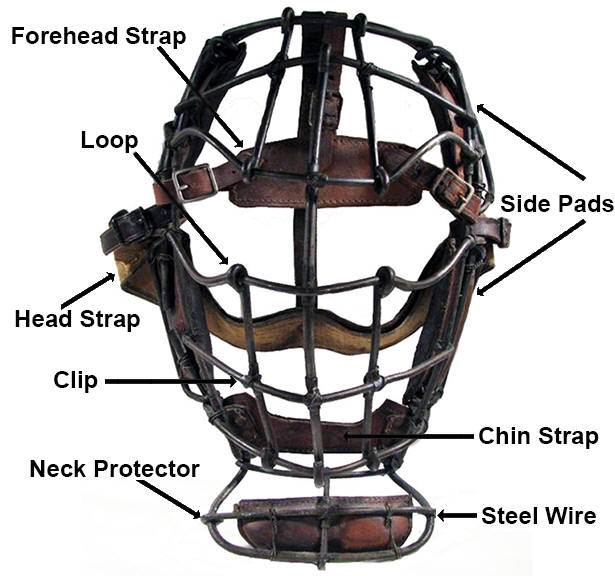
Birdcage catchers mask -
A catcher's mask with a strong wire face
resembling a birdcage designed, and used
in the early days of baseball.
Black Bat - Also known as
a World series
"Black Bat" They were given
to participating players, and dignitaries
from teams in the world series. They have
facsimile signatures of the entire team in
gold on a dark black ebony bat.
Black Sox - A name given
to the members of the 1919 Chicago White
Sox team involved in a scandal with local
gamblers, and accused of throwing the
World Series against the Cincinnati Reds.
Resulting in the suspension of eight
players from baseball. "Eight Men Out" is
a well-known movie that tells the story of
this infamous event.
Blank Back - A baseball
card that has no printing on the reverse
side by design or as a result of a
manufacturing error. Blank backs that are
manufacturing errors usually carry a
premium.
Blanket - Also known as
Felt Blanket, B18 blanket, An early
20th-century collectible consisting of a
square piece of felt or other fabric which
came wrapped around a package of
cigarettes, so-called because they were
sometimes sewn together to form a blanket.
Most popular are the 5 1/4" X 5 1/4"
B18 blankets from 1914.
Bleeding - or Bleed -A
term most commonly used with autographs
when an Item is signed, and the ink
spreads into the material signed. For
example when Sharpie is used to sign a
baseball it tends to "Bleed" into the
baseball. When one color leaks into
another area not intended.
Blue Back - A card with a
blue back. This term is usually connected
to the
1951 Topps Blue Back baseball card
set.
Bobbing Head Also known
as; Bobble Heads; Nodders; Bobbing Head
Dolls, A series of fragile hand-painted
ceramic doll emulating a popular sports
figure, player, team, or mascot that first
came over from Japan in the 1960s. Sports,
Accessories & Memorabilia (S.A.M.)
reintroduced new dolls in the 1990s.
Bobble Heads are also a popular giveaway
at Major League Stadiums today. Bobble
Head - Also known as; Bobbing Heads;
Nodders; Bobble Head Dolls, A series of
fragile hand-painted ceramic doll
emulating a popular sports figure, player,
team, or mascot that first came over from
Japan in the 1960s. Sports, Accessories &
Memorabilia (S.A.M.) reintroduced new
dolls in the 1990s. Bobble Heads are also
a popular giveaway at Major League
Stadiums today.
Book Price - Also known
as "Books" "Books for," Book Value, The
retail selling price that appears in a
price guide.
Bowman - A well-known
card manufacturer that began production in
1948 with baseball, football, and
basketball cards. Their basketball
production was halted that same year,
while baseball and football cards were
produced through 1955. The following year,
Topps purchased the company and ended
their rivalry in the sports card market.
In 1989, Topps once again began production
of cards with the Bowman name. Cards with
this brand name are prominent in the
modern sports card market.
Buckle Back - A baseball
glove commonly used in the early days of
baseball. A wrist adjustment on the glove
to help fit a comfort level, and keep the
glove snug to the hand located on the
lower back of the glove.
Button Back - A baseball
glove most commonly used during the
1940s-1960s. A wrist adjustment on the
glove to help fit a comfort level, and
keep the glove snug to the hand located on
the lower back of the glove. Here is an
example of a
Button back glove.
BVG - Short for Beckett
Vintage Grading, a division of Beckett
Grading Services. |
|
|
|
|
|
C - A designation used for
Canadian Tobacco cards. for example C46.
Cabinet Card - An
oversized card that was issued by tobacco
manufacturers. They were commonly produced
on a thick cardboard stock and available
as premiums in the 19th and early 20th
century. Curio cabinets were very common
in this era, and a favorite place for
collectors to display these treasures,
thus the name cabinet card.
Cachet - A design or
inscription on an envelope to commemorate
a postal or philatelic event. A
collectible Baseball Cachet could include
a players achievements, milestone, and
record breaking accomplishments. A postal
stamp and cancellation will coincide in
date, or and relationship to commemorate
the days event. Popular Cachets include
Z
Silk Cachets, and Gateway
G silk Cachets.
Cachets are also a popular item for player
autographs.
Cello Box - A box that
contains cello packs. These boxes were
distributed to retailers for individual
pack sales. Most cello boxes contain 24
packs.
Cello Pack - A form of
card packaging. These packs usually
contain more baseball cards than the
standard wax packs. These packs are
wrapped in a transparent packaging, much
like cellophane. Cello packs that have a
star visible, especially on the front, are
collectable and carry a premium over that
of the price of the single card.
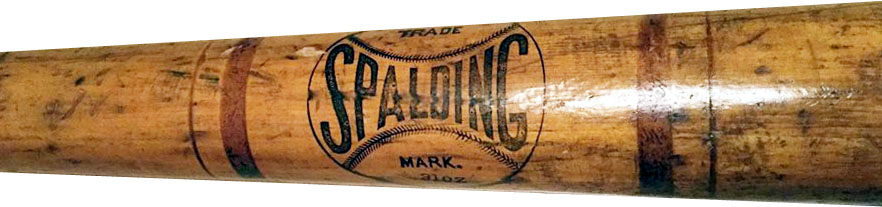
Center Brand - Also known
as Bat Label. A term used with collectible
baseball bats. The markings stamped or
burned onto the center face of a bat by
the bat manufacturer, usually identifying
the name, location, and registered
trademark(s) of the manufacturer. The
center brand can be useful in determining
The date or era a bat was made.
Certificate of Authenticity - Also known as COA
- A statement of the genuineness of an
item (often an autograph), printed on a
piece of paper, thin cardboard, that is
furnished to the buyer by the seller.
Certificates of authenticity can be issued
by the seller or a third party
authentication service. The validity of
the certificate of authenticity depends
upon the integrity and knowledge of the
seller or authentication service.
Checklist - A list of
cards in any one set or series. Checklists
can be found in books and price guides,
although the term is more commonly used
for checklist cards, which are often
included in sports card sets. These are
intended as aids for collectors and
commonly include small boxes that can be
checked when the card is obtained. For
this reason, many vintage checklists are
of great value if found free of markings.
(Checklist can also be applied to a list
of any items that are issued as a set or
series such as pins)
Clubhouse Signature - A
signature that is not signed by the
intended athlete. Most clubhouse
signatures were done by bat boys,
equipment managers, and other available
clubhouse workers. It was, and still is
common for a star player to have a
clubhouse employee sign his name.
Common - A term used to
describe a card that is not a rookie,
semi-star, or star card. These are usually
the least expensive cards in a set.
"Singles" has also become a widely
acceptable term for commons. The term
Common can also be used in regard to
lesser known or desired players in any
given memorabilia set such as silk
blankets, or figurines for example.
Cracker Jack - A brand of
snack consisting of caramel-coated popcorn
and peanuts. It is also well known for
being packaged with a Toy Surprise Inside.
This term Cracker Jack is used as
reference to the 1914 and 1915 Cracker
Jack baseball card set that was issued as
an insert in Cracker Jack boxes.
Cracker Jack is also an
inexpensive Baseball bat sold by Hillerich
& Bradsby (Louisville Slugger) during the
1920s-1950s. Possibly taking advantage of
the snacks popularity the Bat has no
relationship with the Cracker Jack candy.
Crescent Padding - An
extremely desirable style used for
baseball gloves from 1890 to 1910. A
Crescent baseball glove features a raised
padding in the shape of a crescent to form
a pocket to aid in catching the baseball.
From the 1920's to the 1940's, crescent or
raised padding was used for softball
gloves.
Cut Signature - or "Cuts"
- A signature on a small piece of paper,
or "cut" from a larger piece. The lowest
Item in value for a signature. Index cards
are the next step up in value, and both
sell at a fraction of the higher priced
Photos, Baseballs, Bats, and equipment.
Cut Signatures are often cut from an item
that has been ruined to save its value
such as a baseball card, cover of a
publication, photograph, letter or
notebook on which it was originally
signed.
Cuts are commonly used for
inserts
by baseball card companies
|
|
|
|
|
|
Dealer - A person who buys
and sells collectibles professionally for a
profit. Sports cards and sports memorabilia
dealers are usually very knowledgeable about
their specialty, and talking with them is a
valuable experience for collectors.
Diamond Star - A set of
cards that was produced from 1934 to 1936 by
National Chicle. The set consists of 108
color cards that feature artwork done from
original photos. The set is one of the more
popular pre-war issues.
Ding - A term used to
describe the damage on the corner of a
baseball card. A ding is commonly caused by
dropping or mishandling a card. A card with
a ding (or dinged corner) is greatly
devalued. A Ding can also be in reference to
the indentation mark on the surface of the
cover of a publication or photograph left by
being struck by an object.
Doctored - A term used to
describe a collectible item that has been
altered to cover up a flaw. A doctored
baseball card might have been trimmed, as to
sharpen "dinged" corners, or remove the
fraying on a Doctored pennant for example.
Any collectible item that has been doctored
will be devalued, and this practice is
frowned upon, among the collecting
community.
Donruss - A sports card
manufacturer that began production in 1981
with a baseball set and a golf set.
Double Header - A unique
set of baseball cards that was issued by
Topps in 1955. The cards are larger than
standard and feature colored art drawings of
baseball players. When the card is folded in
half, another player's body matches up with
the shared feet and legs of the card. A
Double Header in baseball is when two teams
play two games in one day with the same
crowd in attendance. When referred to as A
day night or Twi-Night Double Header one
game is played in the afternoon and one in
the evening typically with separate
admission fees.
Double Play - A baseball
card set Issued by Gum Inc. in 1941. This
set features 75 black and white cards, each
depicting two different players.
Double Print - A baseball
card that has twice the print run of the
rest of the cards in the set. This is due to
the fact that, occasionally, two of the same
cards will appear on a sheet (usually 132
cards per), which is later cut into
individual cards.
|
|
|
|
|
|
eBay - The World's Online Marketplace®,
enabling trade on a local, national and
international basis. With a diverse and
passionate community of individuals and
small businesses, eBay offers an online
platform where millions of items are traded
each day.
Error Card - A card that
contains a mistake. An error card may have
an incorrect photo, a misspelled name or
incorrect statistical information.
Error
cards will only be worth more money if the
mistake was corrected, and the card that was
printed in the fewest quantity is worth the
most. Not necessary the card with the error.
EX - Short for Excellent.
EX-MT - Short for Excellent
- Mint
Exhibit Card - A
larger-type card that is roughly the size of
a postcard made by the Exhibit card company.
Exhibit cards were commonly sold in arcades
and were produced from the 1920s to the
1960s. |
|
|
|
|
|
Facsimile Signature - Also
known as Facsimile autograph. A stamped or
printed reproduction of an autograph as
might appear on a baseball card, photograph,
souvenir baseball, bat, glove or any product
endorsed by a player of note. A signature
model baseball glove will have the Facsimile
Signature or autograph of the player
endorsing it. More information on
Facsimile
Signatures
Factory Set - An entire set
of cards that was packaged by the
manufacturer for sale to the public. These
sets usually include a distinct box with a
security seal or inner-packing to secure the
cards. Sets from the factory generally carry
a premium over hand-made sets.
FDC -Short for First Day
Cover. An envelope or cachet that is
designed to be postmarked to commemorate a
specific event on the day or anniversary of
the event.
Flat - A term used at
autograph shows to describe a picture,
poster, magazine, postcard or card. Usually
"flats" have a different pricing structure
than equipment, uniforms or baseballs.
Fleer - A manufacturer of
sports cards. The company produced baseball
cards from 1959 to 1963, as well as several
football sets and a single basketball set in
this same era. In 1981, the company once
again began production and was a leading
manufacturer in the market. The last
Fleer
branded baseball cards appeared in 2007.
Foil Packs - A group of
cards that are packaged by the manufacturer
for retail sale. These packs are so named
for their metallic packaging.
Full Bleed - This is the
term used when a card has no border. The
image on the card goes up to the edge of the
cardboard.
Full Ticket - A Ticket for
a baseball game or sporting event that has
not been used or the rain check
"Stub" has
not been torn off. A fully intact ticket as
it was made. A Full ticket separated from a
Ticket block as an uncut sheet of tickets
printed for a series. Today Full Tickets are
more common where as tickets are scanned
upon entry as opposed to "ripped"
Full Web - Baseball gloves
that were most commonly made between
1900-1915 that had sewn in webs known as a
"Full web" These webs were sewn directly to
the thumb and forefinger and extended to
where the thumb and forefinger meet. |
|
|
|
|
|
G
Cachet - A cachet made by the
Gateway Stamp company. The cachet can be
Identified by A G with an arch over the top
located at the bottom center area. Also see
Cachet
GAI - Short for Global Authentication Inc., a professional
grading company.
Gamer - A term used to
describe a game used peice of equipment such
as a Bat or glove.
Game issued - A uniform,
cap, helmet or piece of equipment
manufactured and designed for use in a
college or professional game or sporting
event. A "game issued" bat was ordered by
the player to be used but is not "game-used"
until it actually makes its way into an
actual game.
Game Used - A piece of
equipment that has been used by a
professional player of note during a game
such as a baseball bat or glove. A piece of
equipment used in a professional game such
as a "game used" base. For example a bat
used by a professional baseball player like
Mickey Mantle is "Game Used" A bat that was
used in a little league game is a used bat
not a "Game used" bat.
Game Used Cards - A card
that has a piece of game used memorabilia
embedded into the card. These are often
thicker than regular issue cards.
Goudey - An extremely
popular card manufacturer that produced
cards from 1933 to 1941. The 1933 Goudey set
is their most popular, and arguably the most
popular pre-war set produced. The art
drawing set features numerous Hall of
Famers, including two cards of Lou Gehrig
and four cards of Babe Ruth.
GPC - The initials GPC
stand for Government PostCard. These
pre-stamped postcards were especially
popular for obtaining autographs by mail
from outside stadiums. That way, a fan could
hand a player a self-addressed stamped
postcard that the player could sign and
return at a more convenient time.
Grade - A description of
the condition of a sports card or sports
memorabilia item. Grade is always a big
component of price. The higher the grade,
the more desirable, and consequently, the
more valuable the item. Nowadays nearly all
valuable sports cards are graded using the
10 Point Grading Scale established by
Professional Sports Authenticator (PSA) in
1991.
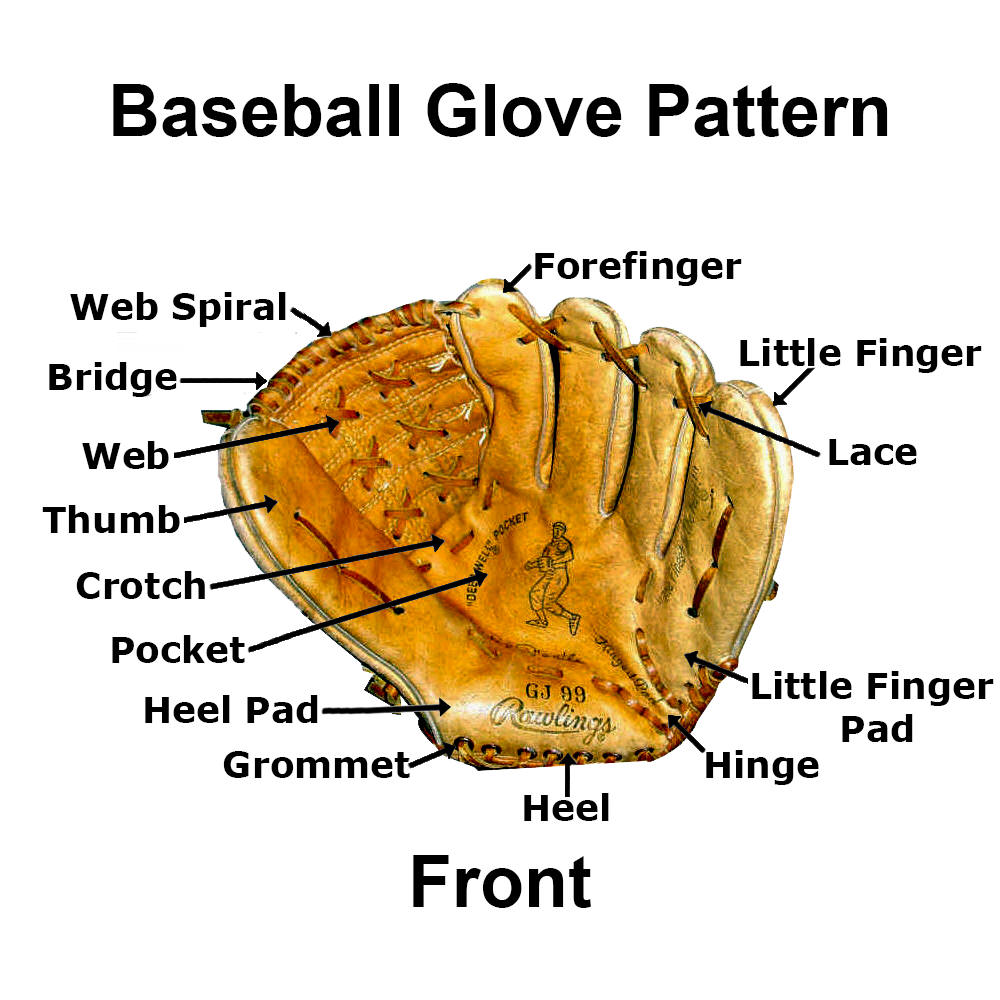
Grommet - The metal
"eyelet's" or ring reinforcements inserted
into the holes of a baseball glove that are
used for lacing. The lacing is inserted
trough the Grommet and helps protect the
leather from ripping. Grommets shown here in
red.
Grommet Web - Short and
narrow strips of leather that contains
grommets (eyelets)
sewn to the thumb and forefinger of a
baseball glove, connected with a single
strand of lace that is passed through the
grommets, and then tied. First appearing
around 1910
Gum Stain - A stain on a
card that is caused by gum. When gum was
inserted in packs, it was placed on top of
the pack, between the wrapper and the card.
Over time, the gum would stain the card.
Cards with gum stains are worth only a
fraction of those without. Topps received
numerous complaints from collectors that the
gum was either staining the cards, or
creating an impression in them, sacrificing
their "mint" condition. The gum was
eliminated in 1991. :( |
|
|
|
|
|
Hartland
- Hartland Plastics A Wisconsin-based
company that produced statues (Hartland
statues) in the 1950s and 1960s. The most
notable of these are the
18 professional
baseball player models, which have become
very collectible. Modern day reproductions
are also available.
High Numbers - A
description of the last, or near the last
series in a baseball card set.
Traditionally, manufacturers would produce
cards in several series. As the season would
wind down, so would public interest and
production. This lower print run resulted in
more limited supply and later, more valuable
cards.
High Series - Also known as
a high number series or high number, a high
series contains baseball cards from the last
series distributed for a set in a given
year. Many of these older high series cards
are of great value, as they were often
released after the baseball season, when
interest for baseball was waning. Therefore,
these cards were often printed or
distributed in smaller amounts than those of
the preceding series. The most well known
high series is from the 1952 Topps set
(#311-407), which includes Mickey Mantle's
first Topps card (#311).
HOF - Short for Hall Of
Fame
HOF'er - Short for Hall Of
Famer. A phrase used to describe a player
elected into The Hall Of Fame.
HOH - Short for Rawlings
"Heart Of The Hide" baseball gloves which
features top of the line HOH shell leather,
deer tanned cow hide palm and finger back
linings. Heart Of The Hide gloves are highly
desired among glove collectors.
Hologram - The silvery,
laser etched trademark printed as an
anti-counterfeiting device by sports card
and memorabilia manufacturers, and
authenticators. As seen on this Hologram
authenticated baseball
HSC - Short for Heritage
Sports Collectibles. |
|
|
|
|
|
Inch
Marks - A term used with baseball
bats referring to the number stamped into
the knob of the bat indicating the length on
store model bats. Model number is not an
inch mark.
Inscription - An extra note
or notation added by a player when signing
an autograph. A player might add an
Inscription on request, or at an autograph
show an extra fee might be charged. On the
resale market collectors will also pay a
premium for inscriptions such as "500 Home
runs," and pay less for personal
inscriptions like "Good Luck Mary"
Insert - A word that
describes cards that were added to a regular
pack to help increase sales. The first
inserts were around the turn of the century,
when tobacco companies used cardboard to
keep packs of cigarettes from getting
smashed. Eventually, pictures were included
on the small pieces of cardboard. Over time,
these premiums became collectible and a key
element of different cigarette sales.
Throughout the years, manufacturers have
used many kinds of inserts. Inserts have
evolved to the point where almost every new
issue available contains at least one type
of insert. These modern inserts are far
rarer than regular issue cards. Inserts from
the past have included posters, decals, and
scratch offs as well. |
|
|
|
|
|
Jersey - A uniform top or
shirt worn by a athlete. A part of the
uniform worn by a team. A Jersey might be an
Item for a collector to have signed. A
game
used Jersey was worn by a player during a
game. An authentic Jersey can be Store
Bought.
Jersey Cards - A card that
has a piece or "swatch" of a
game
used
Jersey embedded into the card. These are
often thicker than regular issue cards. |
|
|
|
|
|
Key Cards
- The most expensive, desirable, or
important cards in a set.
KeyMan
Collectibles - An online source for
information on vintage and modern day
baseball memorabilia and collectibles. A
baseball memorabilia price guide, with
collectors guides and references. KeyMan is
derived form the name of New York Yankees
great micKEY MANtle.
Key
Signatures - The most important
signature or signatures on a team signed
Item or baseball. The signatures of the key
players that define the team for that year.
The team stars or most desired autographs.
Knob
- The end of the baseball bat connected to
the handle that the batter grips. The knob
keeps the hands from slipping off the bat
when swung. Knob styles Refers to the shape
of the knob as it meets with the handle of a
bat. A regular knob, refers to a classic
"Ruth knob," which has a well defined lip
and is clearly larger than the circumference
of the handle area which connects with the
knob. A flared knob refers to a classic
"Hornsby knob" which has a slight lip that
cleanly transitions into the handle. No knob
or knobless, refers to a classic "Clemente
knobless bat" which has no lip and cleanly
transitions into the handle. The knob can
have the model stamped into it on a game
isuued bat or the bat length on a store
model bat.
Krause
- An established hobby publisher, Krause
produces annual 'Standard Catalogs' of
sports cards along with Memorabilia price
guides and weekly issues of Sports
Collector's Digest (SCD).
|
|
|
|
|
|
Labeling Period - Refers to
the authenticator's conclusion, by studying
the Center brand and Barrel labels, or
combination thereof, in determining the time
period that a bat was manufactured. Some
label periods may be as short as a few
months, whereas others may extend for many
years.
Leaf - Well known for its
production of its modern day sets, Leaf is
also well known for several sets produced
right after World War II. In 1948 and 1949,
they produced crude sets of baseball,
football, and boxing stars. Over time, these
issues have become very popular, especially
tough-to-find, high-grade examples.
Lemon Peal Baseball -
Commonly produced and used in the early days
of baseball around 1850 -1860 the
"Lemon
Peal" style Baseball is a 4 piece hand
stitched leather skinned baseball and was
one of the first style baseball used. Named
as such for its stitching that gives the
appearance of a Lemon peal (orange peal). Dark leather was
used for the cover because it was readily
available and easier for the players to see
when the ball was hit in the air on a clear
day.
Letter of Authenticity - A
letter stating that a certain piece of
memorabilia, such as a uniform, is
authentic.
Limited Edition - A term
often used by makers of cards and
memorabilia to indicate scarcity. A limited
edition means just that - production of the
item in question will be limited to a
certain number. However, that number may be
large or small, and is relevant to the
amount of collectors interested in it. The
value of a limited edition item is high only
if the number made is less than the number
of collectors that desire the item. If the
Limited amount made is more than the amount
of collectors interested, the value will go
down from the issued price.
Lithograph - A poster-like
print that is produced by using a special,
high-quality printing process.
LOA - Short for Letter Of
Authenticity
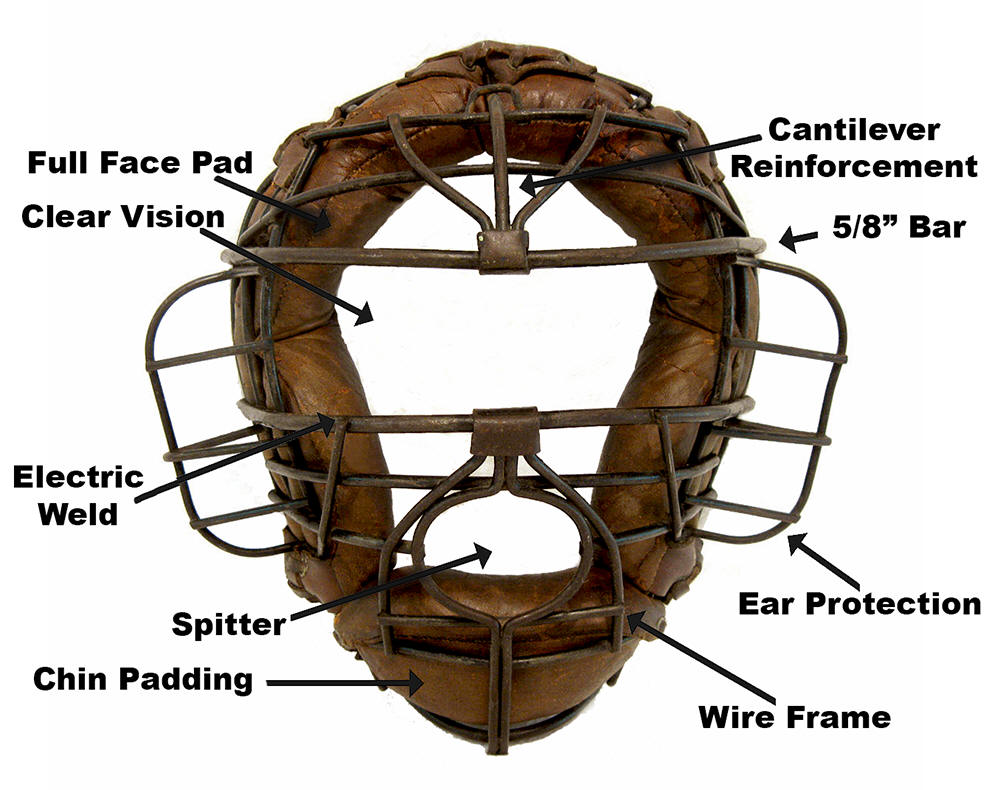
Loop & Clip - A method of
constructing the frame of a catchers mask.
Loop & Clip constructed masks were used
before the Draper & Maynard company
introduced Electric Welded steel wire
construction catchers masks in 1911.
Low series - Low series or
low number cards are from the first series
distributed for a set in a given year.
Production and distribution of these cards
was generally greater as they were the first
run of cards available to the public for
that baseball season. However, there are
exceptions. For instance, the 1933 Goudey
low series or low numbers are worth
considerably more than their higher numbered
counterparts. |
|
|
|
|
|
MC
Short for "Miscut" Type of
qualifier. A card that has no border, or
even portions of another card. Cards with a
factory miscut, such as a diamond cut, or
when another card's image is on the original
card will be designated MC. These cards have
little value.
Minimum Bid - The lowest
acceptable offer that an auction company or
individual sets.
Minor League Card - A card
that features players from the minor
leagues. Minor league cards are a small, but
important part of the market. Most minor
league cards have low print runs and are
difficult to locate.
MK - Short for "Mark" a
term used with baseball card grading. Type
of qualifier. The card exhibits marks caused
by pen, pencil, or some other type of ink
and the presence of the mark or marks causes
the card to fall below the minimum standard
for the grade.
MT - Short for Mint
Multi Signed - (multiple
signed) More than
one or a group of signatures on am item such
as a baseball. An autographed baseball with
only a few signatures of players from the
same team but not enough to be considered a
team signed baseball.
Mushroom Knob - A.G.
Spalding & Bros. patented the
Mushroom knob baseball bat in
1903. The knob was designed to provide a bat
that was properly balanced, and therefore
easier for a player to manipulate.
Mylar - A type of plastic
from which many card holders, plastic sheets
and other protection devices are made.
|
|
|
|
|
|
National - Also known as
"The National" A sports memorabilia show
held annually in different parts of the
United States. The National Sports
Collectors Convention is by far the largest
and most attended show of the year. The
first national took place in 1980 in Los
Angeles, California.
N.I.B. - Short for New In
Box, a term commonly used with baseballs but
can be used with any collectible.
NL - Short for National
League
NLCS - Short for National
League Championship Series. A stage in
baseball's playoff system to get to the
World Series.
NM - Short for Near Mint
NM-MT - Short for Near Mint-Mint
Nodder - Slang for or also
known as; Bobbing Head; Bobble Head; Bobble
Head Dolls, A series of fragile hand-painted
ceramic doll emulating a popular sports
figure, player, team, or mascot that first
came over from Japan in the 1960s. Sports,
Accessories & Memorabilia (S.A.M.)
reintroduced new dolls in the 1990s. Bobble
Heads are also a popular giveaway at Major
League Stadiums today.
Notching - A card-grading
term used to describe indentations along the
edge of a card, sometimes caused by a rubber
band. Notching decreases a card's value. |
|
|
|
|
|
OAL
- Short for Official American League as in
reference to a Major league Baseball used
in the American League.
OC
- Short for Off Center
Oddball- An "off beat" category of sports
collectibles other than the normal cards, or
commonly collected items. Examples could
include An autographed beer can, A player
endorsed Ice cream wrapper (food product),
or A baseball card issued by a fast food
chain or non sports related company. A
unique collectible.
Off Center
- A term most commonly used with baseball
cards. An off center baseball card for
example could have a ratio of 35/65 as
opposed to a perfectly centered card of
50/50
Oil Tanned - A term used with baseball gloves.
Leather that is tanned using oils to create
a very soft, pliable finish.
OJ Cards
- or OJ Short for Old Judge Cards also see
Tobacco Card. Old Judge
- A brand of cigarettes which was popular in
the late 1800's. Also the name given to the
huge set of baseball cards issued as a
premium with that brand of cigarettes. The
Tobacco Cards, issued from 1887-90, carried
advertisements for Old Judge cigarettes.
Olympian
- A brand name of sporting goods sold by
Firestone Stores, and Firestone
dealerships.
Olympic - A brand sold by
the Olympic Sporting Goods Company, a
small New York based company that operated
from the 1920's until the 1960's. The
Olympic glove brand was also made for and
sold in Western Auto Stores. Many of the
gloves they sold were actually produced by
Denkert, then stamped with the Olympic
brand name.
ONL
- Short for Official National League as in
reference to a Major league Baseball used in
the National League.
O-Pee-Chee
- A division of the Topps company located
in Canada that manufactures baseball and
hockey cards.
|
|
|
|
|
|
Pack
- A group of cards that are sealed by the
manufacturer for retail sale.
Patina - The surface
appearance of something grown beautiful
especially with age or use.
Pennant - A
banner or flag typically sold at souvenir
stands at ballparks. The majority of
pennants are triangular in shape.
Perez-Steele - A Line of popular Baseball Hall
of Fame art postcards that is ideal for
autographs, produced by artist Dick Perez
and his late business partner, Franklin
Steele.
Personalized - A term that describes
a special note, next to a signature, such
as: "Dear…", "To my pal…" or "Best wishes…"
In autograph collecting circles this is also
known as an "inscription".
Phantom - A
ticket, a press pin or any product produced
in anticipation of a team making the
playoffs, or World Series But not used when
the team failed to make it. Phantom Tickets
or Phantom Press pins are the most popular
among collectors.
Pine Tar - A sticky
substance added by a player to the handle
area of a bat for added grip. The tar will
typically get darker with age. Some players
are fairly consistent with the areas of a
bat that are tarred, and it may be
identified as a Specific Player Use Trait.
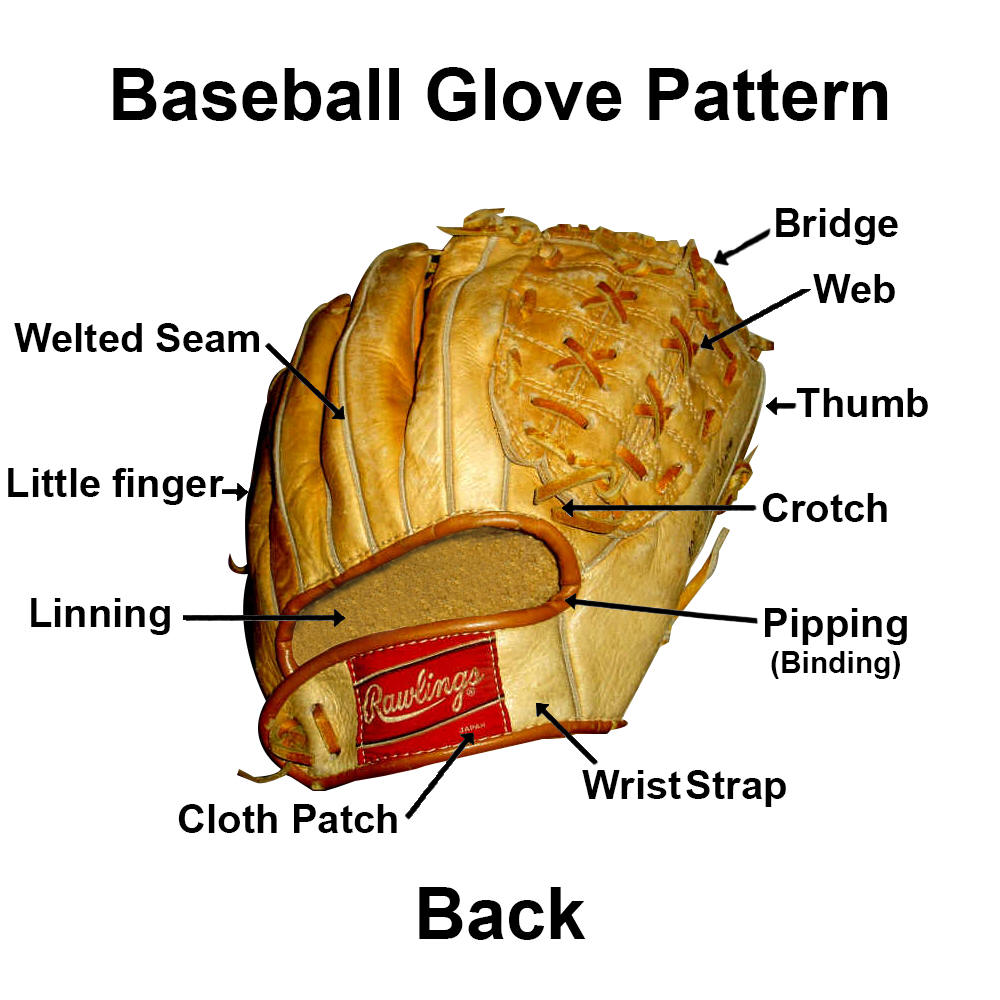
Piping - A term used with baseball gloves
describing the tubular seam sewn into the
edge or border of the leather on a baseball
glove. Commonly found on the edges of the
wrist strap on the back. Most piping is made
of leather or cloth, vinyl, and plastic on
cheaper gloves.
Piping shown here in black.
Play Ball - A very popular pre-war baseball
card manufacturer that produced sets from
1939 to 1941. Also, the phrase used by an
umpire to signal the start of a baseball
game.
Player Use Attributes - Denotes that a
bat, uniform or piece of equipment has
evidence of player use. For example a number
written on a baseball cap can be attributed
to player that wears that uniform number. A
baseball bat can have a tape pattern that is
attributed to a particular player.
Playground Ball - Common to
the 1920's-1930's a
Playground baseball or softball was made
with raised seam The raised seams made the
ball more durable for use in the playground,
and would last longer than the stitched
balls.
Post War
- A collectible that is from a time after
World War II.
Powerized - a term used and
stamped onto Louisville Slugger baseball
bats, and patented by the Hillerich &
Bradsby Co. in 1931. The
"Powerized" process
is to harden the surface of the bat much
like the bone rubbed finish of the 1920's.
Press Pin -
Press Pins which have been
distributed since 1911, are distributed to
members of the media by the host teams for
the World Series games. The press pins are
made to be worn on the lapel to provide
reporters access to cover the game. All Star
Press Pins are also a popular collectible.
Pre War - A collectible that is from a time
before the start of World War II.
Premium -
An item issued as an advertising extra. In
most cases, collectors have had to send away
to the companies or manufacturers to receive
a "premium".
Price Guide - A list of
estimated values for sports cards and/or
sports memorabilia. The first major sports
collectibles price guide was The Sport
Americana Baseball Card Price Guide issued
by Dr. Jim Beckett in 1979. Today, there are
dozens of guides such as Krause's 'Standard
Catalog', Beckett's 'Baseball Almanac', and
Collector's Universe's 'Sports Market
Report'.
Price Guides - Third party guides
published on a regular basis to indicate the
estimated value of an item according to the
current market, such as
Keymancollectibles.com, the Beckett price
guide, and the Krause standard catalogs of
sports cards.
Private signing - When an
athlete signs for an individual or company,
as opposed to a public signing, where all
comers are welcome. Many wholesalers pay for
the services of top athletes, usually by the
hour. These companies then offer these
signed items for sale to the public.
Promotional Card - A card produced by a
manufacturer to promote upcoming issues.
Generally, these cards are more limited than
the regular issues.
Provenance - The history
of ownership of a particular item. It allows
the buyer to secure additional insight as to
the origin or chain of custody of the item.
PSA - Short for Professional Sports
Authenticator. Founded in 1991, PSA was the
first widely accepted grading service and
set the standard for the graded card market.
PSA/DNA - A third party authentication
service that focuses on sports and music
autographs. PSA/DNA uses synthetic DNA that
is only visible with the aid of a laser to
mark the item being authenticated. PSA/DNA
also affixes a small sticker, which has a
unique certification number, onto the item.
This unique certification number matches a
PSA/DNA certificate of authentication that
is issued with the item at the time of the
authentication. |
|
|
|
|
|
Qualifier - In some cases, a card will be
designated with a qualifier. A "qualified"
card is a card that meets all the criteria
for a particular grade, but fails the
standard in one area. For example, a card
which exhibits all the qualities of a NM-MT
8, but is 90/10 centered left to right, will
receive a grade of NM-MT 8oc. The "OC"
stands for off-center. Here is a brief list
of qualifiers: OC (Off-center), ST (stain),
PD (Print Defect), OF (Out of Focus), and MK
(Marks). |
|
|
|
|
|
Rack
Pack - Packs designed for retail
sale. These clear packs usually contain
three panels of cards, which are designed to
hang from store displays. Rack packs with
stars showing are collectible, much like
they are with cello packs, although they are
not quite as valuable.
Rack Marks - A term used
with
game
used
bats. Usually colored streaks
or colored blotches caused by contact with
the inner and/or outer surface of the bat
rack, transferring onto a bat.
Rain Check - The remaining
portion of a ticket ripped off when
attending a game. A Ticket Stub. Not as
valuable as a Full Ticket, but still
collectible.
Raw - Refers to any card
that is not encapsulated by a grading
service.
Razorback - Supple
lightweight leather tanned from pigs or
hogs, it is not as thick as cowhide or steer
hide.
RC - Abbreviation, short
for Rookie Card . Notes a player's rookie
card.
Re-colored - The art of
fraudulently re-coloring the surface of a
sports card to hide wear or physical damage.
Red Back - A card with a
red back. This term is most commonly used
with the
1951 Topps Red Back set.
Red Heart - A
33 card set
from 1954 that was issued by the Red Heart
Dog Food Co. The set was issued in three
series of 11 cards each that had different
colored backgrounds behind the player: Red,
green, and blue. The red background series
is considered to be the scarcest. This issue
was redeemable by mail from the manufacturer
and was reportedly available as late as the
early 70's.
Refractor - A card that has
chrome reflective devices. These cards often
come with a thin removable protective layer.
The card loses some value if this plastic
layer is removed.
Regional Set - A set issued
only in a specific geographic area. These
sets are usually smaller and feature one or
several teams from the issued area.
Reprint - A card that is a
reproduction of an original, usually more
expensive card or set. A reproduction of an
original publication.
Ring Bat - A baseball bat
decorated with painted or stained rings
or bands around the center or and barrel,
"Ring Bats"
were common to the late 1800's.
Rookie - A player in his
first season. Also short for rookie card.
Rookie Card - A players
first year of cards, whether or not it is
his rookie season. Players may have one or
dozens of rookie cards, depending on how
highly touted he was as a youngster and in
which year his rookie card was issued.
ROY - Rookie of the Year. |
|
|
|
|
|
Salesman's Sample - An
example of a commemorative championship ring
or a jersey produced by companies for
players and team officials to preview. Not
as a collectible, but often mistaken for the
real thing.
SCD - Short for Sports
Collectors Digest. Score - A sports card
manufacturer which first started production
in 1988.
Scorecard - A publication
available at a baseball game used by fans to
chronicle the outcome of the game. also
known as a
program.
Scored - A scorecard that
has been marked up or used by fans to
chronicle the outcome of the game.
Secretarial Signature - An
autograph of a celebrity that is actually
done by his or her secretary, an other
assistant or even a spouse. Sports
celebrities are bombarded by requests for
autographs. Most don't have the time to
answer all of the requests, so some have
their secretaries do the signatures.
Autopens are sometimes used.
Sepia - or
sepia tone. A
dark reddish-brown coloration used in some
photos instead of traditional black and
white. A style typically found with vintage
photos.
Series - A group of cards
that are a part of a larger set. Until the
1970s, many card manufacturers, especially
Topps, issued cards in several series, which
were released throughout the season.
Set - An entire run of
cards from a given issue, including all card
numbers that were produced.
SGA - Short for Stadium
Giveaway.
SGC - Short for Sportscard
Guaranty Corporation, a professional sports
card grading company.
Sharpie - A permanent
marker made by Sanford in a variety of
colors and pen points for use on paper,
cloth or leather. It is not advisable to use
for autographs on baseballs because the ink
has a tendency to bleed. Sharpie was made
available during the 1970s.
Short Print - A card that
is printed in lesser numbers than the other
cards in the same set. Generally, short
prints have a print run of half that of the
other cards.
Side Writing - A term used
with
game
used bats. Refers to the writing,
usually in grease pencil, on the barrel of a
bat, written by a manufacturer employee, to
document the receipt of a bat by a player,
in making future player bats in the same or
similar specification. When legible, the
writing will indicate the player who shipped
the bat back to the manufacturer, the
city/and or team name, the league of the
team, and the date the bat was received at
the factory. Side written bats are usually
found on bats of the pre-model number era.
Signature model - A term
used to describe a player endorsed baseball
bat or glove baring the players signature. a
Store model
bat or
glove.
Signed-in-the-Presence - An
autograph that was signed in the presence of
the seller or a representative of a third
party authentication service. The validity
of the signed-in-the-presence status of an
autograph is dependent upon the integrity
and reputation of the seller or
authentication service. The largest and most
respected signed-in-the-presence
authentication service is PSA/DNA.
Single Signed Baseball -
This term is for baseballs that have been
autographed by only
one player. Balls that
are single signed can be worth more than a
baseball that have multiple signatures with
the same player.
Skybox - A sports card
manufacturer that started production in the
1990's.
Slabbed - A term used to
describe a professionally graded card that
has been encapsulated in a sonically sealed
card holder.
Slabbing - The process of
encapsulating a card in a sonically sealed
holder.
SLU - Short for Starting Lineup.
SP
- Abbreviation for short print. Also, a high
quality set produced by Upper Deck.
Spikes - Another name for
baseball shoes or cleats.
Split Finger - A baseball
glove with no lacing between the fingers.
Split Finger Gloves were most commonly made
during the pre war era.
Sportflics - A manufacturer
of baseball cards in the 80's and 90's, best
known for their 3D style cards.
Sporting Life - Sporting
Life was a major publication in the early
part of the century. They issued numerous
sports card sets, the most popular of which
was the 1911 M116. Offered as a premium to
subscribers, these cards were issued in 24
different 12-card series.
Sports Kings - A popular
issue from 1933/1934 that featured the top
athletes from that period. The issue was
produced by Goudey Gum Inc. Both of these
sets are among the most popular pre-war
issues ever produced. After 73 years Sport
Kings cards are returning for release in
October, 2007.
Sports Market Report (SMR)
- The leading price guide for professionally
graded sports cards.
ST (Stain) - A term used in
baseball card grading. Type of qualifier.
The card exhibits staining which falls below
the minimum standard for the grade. This
could be a gum, wax, water or other type of
stain.
Stadium Giveaway - Also
known as SGA. An item that is given away at
a baseball game. Popular Stadium Giveaway's
include Bats, Bobble heads, and Caps.
Stain Residue - or a mark
left on the surface of a sports collectible,
usually as a result of contact with a
foreign.
Stamped - An autograph
applied to a baseball, photo, card or other
item such as a signature model bat or glove.
A facsimile signature. not hand signed.
Stand-ups - Refers to a
type of card that was die cut around the
player's picture. The background section
then could be folded in half, so the card
could stand up by itself while the player's
picture stood alone. The most well known
stand-up issues are the 1964
Topps Stand Ups
and the 1934-36 Batter Up set. The cards can
be difficult to obtain in high grade, as
many of them were folded, thus compromising
their condition.
Star - A player that stands
out above the rest. A better than average
player.
Starting Lineup - Also
known as SLU. Toy action figures that depict
sports athletes. These are made of plastic
and commonly come in a
sealed package with a
baseball card. These figures are very
collectable and are most valuable when in
their original packages.
Store Model - A retail
baseball bat or glove that is not a
game
issued or
game
used. Sold in stores. made
available to the public.
Stub - Ticket Stub - The
remaining portion of a ticket ripped off
when attending a game. A rain check. Not as
valuable as a
Full Ticket, but still
collectible.
Sweet spot - The
shortest
distance between two seams on a baseball.
This location on the baseball is the most
preferred by collectors because it is
centered as to the point of view, and
pleasing to the eye when displayed. The
other "sweet spot" is were the manufacturing
stamping is placed on the ball. The sweet
spot is the section of a baseball typically
reserved for the team manager on team signed
baseballs, and is the most desirable spot
for an autograph on single-signed baseballs. |
|
|
|
|
|
T -A letter (prefix) used
as a designation for a 20th Century
Tobacco
cards. A "T" with a one digit number for
Example T3 (Turkey Reds) T4 (Obak Premiums)
T5 (Pinketon Cabinets) Indicates an
oversized card. One exception to the T-200
premium cards. Other Tobacco cards as an
example include T206, T210, T211 T227.
T-206 - A classic set of
over 500 small tobacco premium cards issued
in various brands of cigarettes from
1909-1912. This set contains dozens of cards
depicting Hall-Of-Fame players of the day.
Widely recognized as one of the three most
important sports card sets ever produced.
T.C.G. - This abbreviation
for Topps Chewing Gum Company, and can be
found on the backs of many Topps produced
cards.
Team Card - A card that
pictures an entire sports team.
Team Set - A complete run
of players from a given team from a larger
set.
Team Signed Baseball - or
Team Baseball. A baseball autographed by the
majority of the members of a particular
team. Most collectors consider 15 -19
signatures a good minimum for a team signed
baseball. 21 or more signatures is a solid
number for a team baseball. Key Signatures
are the most important signatures on a team
signed baseball. Less than 10 signatures
could be considered a Multi signed baseball.
Test issue - A set or
sampling of cards that is issued by a
manufacturer in limited supply, in order to
test its marketability. For example
1951
Wheaties Test Issue.
Tiffany set - A high end
set of cards, issued by Topps. These sets
were identical to the regular issue set,
except for the higher quality white
cardboard stock and the addition of a
protective UV coating.
Tobacco card - A card that
was issued in a tobacco product as a
premium. The most well known issue is the
T-206 set, which includes the Honus Wagner
card, the most expensive card in the
industry. A majority of the cards were
produced around the turn of the century,
although there were Red Man tobacco sets
issued in the 1950s.
Topps - The most recognized
sports card manufacturer. They are most well
known for the 1952 Topps set, the king of
post-war issues. Today, Topps still
dominates the market, with Topps Chrome,
Topps Finest, and Bowman Chrome issues.
Traded Set - A set of
cards, usually factory packaged, that
features players who switched teams during
the season, as well as those who made their
debuts. Topps, who started this trend in
1981, is most well known for traded sets.
Other companies also produce traded sets,
although they refer to them by different
names such as "Update" (Fleer) and
"Rookie/Traded" (Score) sets.
Trimmed - A card that has
been doctored by cutting or shaving the
edges. The most obvious reason for this is
to improve the condition of corners, by
removing the worn areas. Cards are also
trimmed to correct centering problems. Cards
that have been trimmed have very little
value. Other examples of a trimmed Item
could be the removal of fraying on a
pennant. |
|
|
|
|
|
UDA
- Short for Upper Deck Authenticated. Uncut
sheet - A sheet of cards that has not been
cut by the factory into individual cards.
Most uncut sheets contain 132 cards.
Un-scored - A scorecard or
program that has not been filled in or
scored.
Upper Deck - A major sports
card manufacturer that started in 1989 with
a premium issue. The 1989 Upper Deck set is
very well known for its inclusion of the
extremely popular Ken Griffey rookie card.
The company produces sets for all sports, as
well as other lines of cards such as SP,
SPX, SP Authentic, UD3, and Collector's
Choice.
Upper Deck Authenticated (UDA)
- The sister company of The Upper Deck Co.,
which produces authentic autographed
memorabilia items under contracts with star
athletes including Michael Jordan.
UV - Stands for
Ultraviolet. The Sun emits harmful
ultraviolet radiation. UV light can fade
autographs if over exposed to. UV protective
cases help prevent fading of signatures or
other memorabilia. A glossy UV protective
coating applied to sports cards. |
|
|
|
|
|
variation - A card that is
different, usually subtly, from its more
common counterpart in any set. Some
variations are error cards that were
corrected by the manufacturers, while other
variations might be as simple as a color
change in the background of the card. Many
variations are extremely rare, as they were
corrections made early on in the press run,
and therefore, have considerable value. The
variation with the least amount printed
would be the most expensive. This can also
apply to other forms of memorabilia such as Armour Coins
1955 Mickey Mantle Variation
for example.
Vending Box - A box of
cards (usually 500) that was originally
issued by the manufacturer for use in
vending machines. Later, these were more
often used by dealers who would collate the
boxes into sets for sale to the public.
Vending case - A wholesale
unit of cards, which contains vending boxes.
Almost all vending cases contain 24 vending
boxes, or 12,000 cards.
VG -Short for Very Good, A
term used in grading.
VG-EX - Short for Very Good
-Excellent, A term used in grading.
Vintage - A term usually
intended to indicate an item was issued or
produced quite some time ago. Aged or of
older origin. For example: a vintage 1955
baseball card as opposed to a modern day
2015 baseball card. A piece of memorabilia
manufactured about 25 or more years ago.
Vintage, from the early days. |
|
|
|
|
|
Want
List - A collector's or dealer's
list of items wishing to acquire through
purchase or trade. Often, a collector will
send a dealer a "want list," and the dealer
will try to locate the items on the list. A
Want list can be posted to locate an Item by
others.
Wax
Pack - An unopened pack of cards,
named for its traditional form of packaging:
wax-coated paper that is sealed shut at the
factory by simply applying heat. Wax packs
may contain anywhere from one to 15 cards.
|
|
|
|
|
|
|
|
|
|
Yearbook - An annual
publication put out by sports teams
chronicling the past season's results and
reporting on their prospects for the
upcoming year. |
|
|
|
|
|
Z Silk
Cachet -
AKA
Z-Cachet- A
cachet made by Historic Limited editions
located in New Canaan, Conn.
President of the company John Zaso. The
cachet can be Identified by a "Z" located at
the bottom center area. Also see
Cachet. |
|
|
| |
Ask
Steven: Direct your questions or feedback,
about Baseball Memorabilia to Steven KeyMan
Steve@keymancollectibles.com You can also Send
KeyMan pictures of your personal Memorabilia Display,
and get your own Free
Collectors Showcase Room featured on the website.. |
|
|
|
|
|
|
|
|
|